
"soil elevation climate"
600 article(s) found

Planting coffee trees requires the weather, climate and soil quality of the province.
1. Arabica coffee is not resistant to high temperature and humid climate, nor can it stay at a low temperature below 5 ℃ for a long time, so it is mostly planted on steep slopes at elevations of 1000 to 2000 meters above sea level. On the other hand, Robusta caffeine is adaptable (Robusta means tenacious) and is mostly grown in lowlands below 1000 meters above sea level. The average rainfall for the whole year is in

Soft and silky Colombia Nalinglong Fine Coffee Bean Planting Location Climate Elevation
Colombia coffee is the first coffee produced in Medellin, both in terms of yield and texture. It is characterized by full coffee beans, rich nutrition, moderate acidity, good balance, rich aroma and soft and smooth taste. Apart from Medellin, Armenia and Manizales, the capital cities of two neighboring provinces in the south, are also famous coffee producing areas.

Cajamarca, Peru Location Elevation Climate Coffee Growing Conditions
Professional coffee knowledge exchange More coffee bean information Please pay attention to coffee workshop (Weixin Official Accounts cafe_style) Peru is located in the west of South America, facing the Pacific Ocean in the west, bordering Brazil, Colombia and Bolivia, several well-known coffee-producing countries in South America. The Andes Mountains run through the north and south. The geographical environment and climate influence of diversified producing areas produce many different kinds of coffee. do

Guatemala Flower God Coffee Planting Situation Location Climate Elevation Profile
Coffee was introduced to Guatemala in 1750 by Father Jesuit, and German colonists developed the coffee industry in the late 19th century. Today, most of the coffee industry is produced in the south of the country. Guatemala has seven major coffee producing areas, each producing area produced by the coffee flavor is different, but in summary, Guatemala coffee are

Santa Rita Manor Coffee producing area in Colombia what is the elevation of Santa Rita Manor coffee beans
For the exchange of professional baristas, please follow the Coffee Workshop (Wechat official account cafe_style) Coffee production area of Chateau Santa Rita, Colombia. Introduction of Ireta Manor Coffee beans altitude Colombia Colombian population: 47073000 Colombia has well-defined growing areas and the impressive variety of coffee they produce. Whether you want to be round and thick
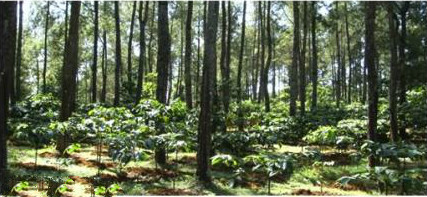
Guatemala Coffee Price latest Guatemala Coffee Price / Wholesale quotation Guatemala's eight largest producers
[guide] the Ekatlago Valley rises to 2000 meters (6500 feet), with dense shade and unique ecology, and the nearby Fuego volcano erupts, making its coarse, sandy soil rich in various minerals. Temperate sea breezes from the Pacific Ocean and seasonal climate have raised the Ekatangol Valley in Guatemala Guatemala to 2000 meters (6500 feet).
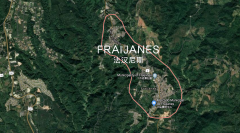
Geographical and climatic characteristics of Fahannis coffee producing area in Guatemala the tonality of French Hannis coffee
The Fahannis region is characterized by volcanic pumice soil, high elevations, heavy rainfall, changes in humidity and active volcanoes. The volcanoes around the Fahannis area are quite high above sea level, so that the Farrakhan Plain is still an active volcanic area, and the soil is rich in pumice, so the geographical environment of this producing area is similar to that of Antigua. However, the differences

Boutique coffee beans: introduction to boutique coffee beans at Popayan Manor in Coca Hill, Colombia.
Cauca province is a certified coffee producing area in Colombia, with an average elevation of 1758m and a maximum elevation of 2100m. The topography, precipitation, temperature and volcanic soil of the area prepare suitable conditions for the growth of coffee. Cauca is 80% mountainous, with parallel mountain systems in the east and middle, part of the Andes, and the central mountain system includes two major volcanoes, Sotar.

Caramel taste of Panamanian Cajun Louis Manor Fine Coffee Bean cultivation Geographic location and Climate
About 50 coffee farmers here form a small cooperative, all in the traditional way of producing coffee to allow coffee to grow in a near-natural environment. Although the yield is not high, it can maintain a rich ecological environment, and soil quality can be maintained or even improved. The natural planting method is not only beneficial to the environment, because the coffee fruit grows slowly, so it is easier to grow well.

Characteristics of Coffee from Eight Major Producing Areas in Guatemala
Elevated to 2000 meters (6500 feet), it is densely shaded and ecologically unique, with the nearby Fuego volcano erupting intermittently, making its coarse, sandy soil rich in minerals. Temperate sea breezes from the Pacific Ocean and seasonal climates allow this region's coffee to be sun-dried and processed by home-style traditional methods accumulated over the years. [Features] Acidity is obvious, dry

Introduction to the Flavor characteristics of Colombian Coca
Cauca province is a certified coffee producing area in Colombia, with an average elevation of 1758m and a maximum elevation of 2100m. The topography, precipitation, temperature and volcanic soil of the area prepare suitable conditions for the growth of coffee. Cauca is 80% mountainous, with parallel mountain systems in the east and middle, part of the Andes, and the central mountain system includes two major volcanoes, Sotar.

A brief introduction to the market price of Columbia's exquisite boutique coffee bean varieties
The annual rainfall is 2000 to 3000 mm, latitude 1-11 15 north and longitude 72-78 west. The specific range of elevation is more than 2.000 meters. By a special combination of various factors, the latitude, altitude, soil, plant origin of species and varieties of coffee in the coffee growing area of Colombia, the rain pattern produced by the climate and tropical convergence of the coffee growing area, in one.

Introduction of Colombian Coffee Origin Certification region Cauca Province
Cauca province is a certified coffee producing area in Colombia, with an average elevation of 1758m and a maximum elevation of 2100m. The topography, precipitation, temperature and volcanic soil of the area prepare suitable conditions for the growth of coffee. Cauca is 80% mountainous, with parallel mountain systems in the east and middle, part of the Andes, and the central mountain system includes two major volcanoes, Sotar.

Kenya's climatic and geographical conditions introduce boutique coffee
Kenya's climatic and geographical conditions provide unique conditions for the growth of high-quality coffee beans, which are located in eastern Africa, the equator runs through the middle, and the East African Rift Valley runs through the north and south. It is bordered by Somalia to the east, Tanzania to the south, Uganda to the west, Ethiopia and Sudan to the north, and the Indian Ocean to the southeast. The coastline is 536 km long. There are many plateaus in the territory, with an average elevation of 1500 meters.

A brief introduction to the description of the flavor and aroma characteristics of Columbia's exquisite coffee beans
The annual rainfall is 2000 to 3000 mm, latitude 1-11 15 north and longitude 72-78 west. The specific range of elevation is more than 2.000 meters. By a special combination of various factors, the latitude, altitude, soil, plant origin of species and varieties of coffee in the coffee growing area of Colombia, the rain pattern produced by the climate and tropical convergence of the coffee growing area, in one.

Columbia Linglong Coffee Flavor description, Taste characteristics, Variety Grinding scale introduction
Columbia linglong coffee flavor description variety grinding scale introduces that the annual temperature is about 18 degrees Celsius, the annual rainfall is 2000 to 3000 mm, latitude 1-11 15 north, longitude 72-78 west, and the specific range of elevation can exceed 2.000 meters. By a special combination of various factors, the latitude, altitude, soil and species of the coffee growing area in Colombia
Fine coffee Rwanda coffee treatment method washing, elevated scaffolding sun drying
Since the 1920s, Arabica coffee grown in Rwanda has been famous for its unique fruit sweetness and rich grass aroma. In recent years, the Rwandan government has taken positive measures to vigorously promote coffee production, set up coffee production cooperatives in various places, and give technical guidance and financial support to farmers, so that coffee production has made considerable progress. University of Rwanda

Fine coffee Rwanda coffee treatment method washing, elevated scaffolding sun drying
Since the 1920s, Arabica coffee grown in Rwanda has been famous for its unique fruit sweetness and rich grass aroma. In recent years, the Rwandan government has taken positive measures to vigorously promote coffee production, set up coffee production cooperatives in various places, and give technical guidance and financial support to farmers, so that coffee production has made considerable progress. University of Rwanda

A brief introduction to the planting situation of Colombian boutique coffee beans with mild taste, geographical location, climate and altitude
At present, most of the Colombian manors adopt the mixed mode of 70% Kaddura and 30% Colombia, and the delicious Dibica has disappeared. The overall coffee variety configuration in Colombia is roughly 50% in Kaddura, 30% in Colombia and 20% in Tibica. With rich landforms, low latitudes and high elevations, Colombia has excellent conditions for the growth of boutique coffee. The Costa Rican coffee area lies between three and eight degrees north latitude, belonging to low latitude.

Coffee production area of Lazmus Manor in Colombia what is the elevation of coffee beans in Lazmus Manor?
Exchange of professional baristas follow the Coffee Workshop (official Wechat account cafe_style) TOLIMA TOLIMA Tolima, one of the notorious rebel strongholds of Colombia's Revolutionary Armed Forces of Colombia that until recently held control. Tolima has been fighting in recent years.